Cultural Experiences in Big Island
Where History, Food, Music, and Storytelling Are Still Part of Everyday Life
✓ Free cancellation · ✓ Instant confirmation · ✓ Local expert guides

Written by a Cultural Expert
Leilani AkoOn This Page
Aloha! I'm Leilani Ako, and Hawaii Island is more than beaches, waterfalls, and volcanoes. It is a place where history, food, music, language, and storytelling are still part of everyday life. The best cultural experiences in Big Island, Hawaii, help visitors understand the island in a deeper and more respectful way.
From traditional luaus and hula performances to historic parks, sacred sites, food experiences, and guided tours, Hawaii Island offers meaningful ways to connect with its living heritage. These experiences are ideal for families, couples, first-time visitors, and anyone who wants to go beyond sightseeing.
Top-Rated Cultural Tours · Big Island
Experience Authentic Hawaiian Culture
🌺 Why Big Island Cultural Experiences Are Worth Exploring
The Big Island is closely tied to Hawaiian history. It is the birthplace of King Kamehameha I, who later unified the Hawaiian Islands. It is also home to sacred temples, ancient fishponds, petroglyph fields, royal grounds, and cultural places that continue to hold meaning today.
Big Island cultural experiences give visitors a better understanding of the island's people and land. A hula performance becomes more powerful when you understand that hula tells stories. A visit to a lava field feels different when you learn about Pele, the Hawaiian volcano deity. A traditional meal becomes more meaningful when you understand the role of taro, poi, fishing, farming, and family.
These activities also help visitors travel with more care. They teach the importance of respecting sacred sites, supporting local guides, staying on marked paths, and listening to the stories connected to each place.
Handpicked by Leilani Ako
Top Big Island Cultural Experiences
Traditional Luau Experience
Food · Music · Hula · Fire Knife
Historic Sites Tour
Puʻuhonua · Puʻukoholā · Petroglyphs
Volcanoes Cultural Tour
Pele Stories · Hawaiian Perspective
All tours led by local Hawaiian cultural experts · Prices vary by season and availability
🎭 Traditional Luau Experiences
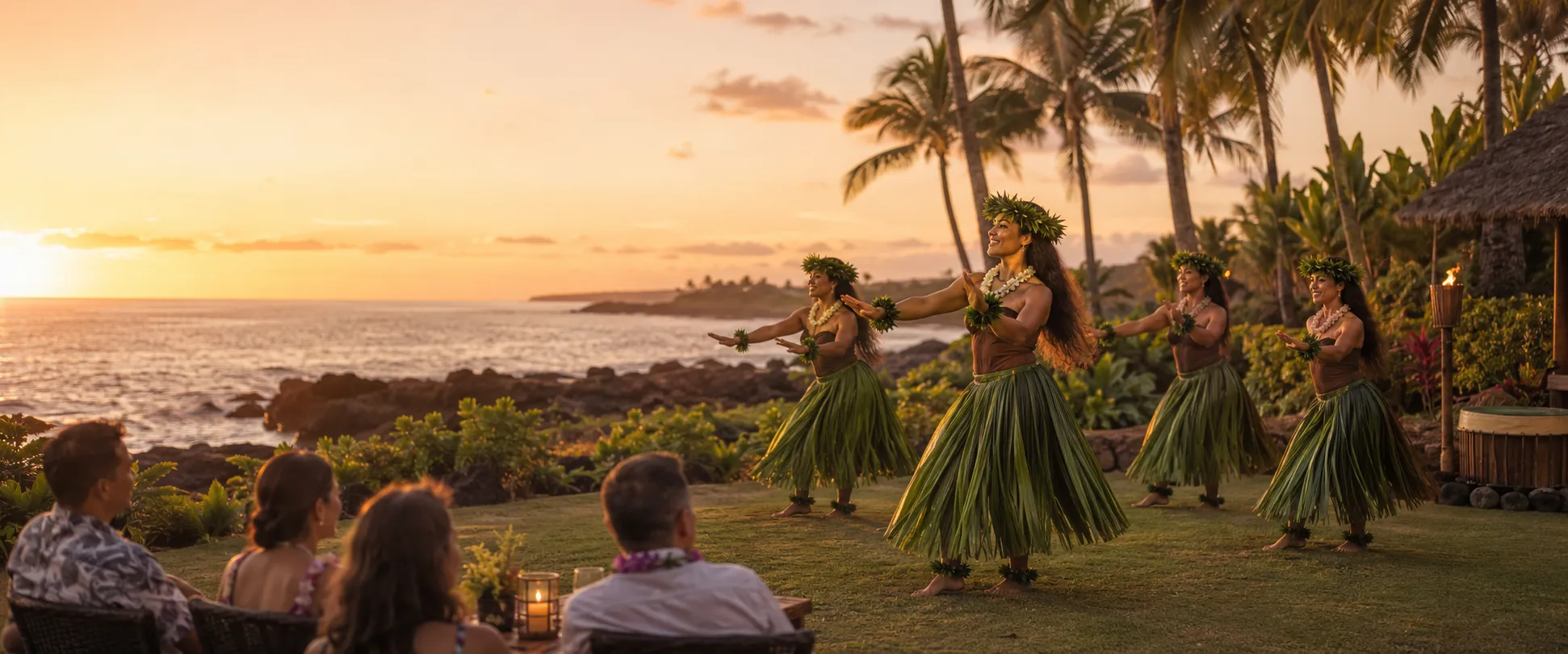
A luau is one of the most popular ways to enjoy Hawaiian food, music, dance, and storytelling in one evening. Many Big Island luaus include dinner, live music, hula, fire knife dancing, and performances that share stories from Hawaii and wider Polynesia.
Guests can try local and traditional dishes such as kalua pork, poi, lomi salmon, haupia, and laulau. They can also learn how chant, music, and dance have been used to share history, values, and identity across generations.
For many travelers, a luau is a relaxed introduction to cultural experiences in Big Island, Hawaii. It is a good option for families, groups, and visitors who want an evening activity with both entertainment and cultural learning.
Experience authentic Hawaiian culture
Book a Traditional Luau
Dinner included · Live performances · Family-friendly
💃 Hula and Hawaiian Music
Hula is not just a performance. It is a form of storytelling. Every hand movement, step, facial expression, and rhythm can carry meaning. Hula can share stories about ancestors, nature, love, gods, places, and important moments in Hawaiian history.
Hilo is home to the Merrie Monarch Festival, one of the most respected hula events in the world. The festival takes place each spring and brings together hālau hula from across Hawaii and beyond. Tickets for the main competition are limited, but visitors may still enjoy festival-related public events, arts fairs, and community celebrations.
Visitors can also experience hula through luaus, hotels, cultural centers, and local events. Choosing performances that explain the meaning behind the dances makes the experience more memorable and respectful.
🌺 Leilani's Insider Tip
The Merrie Monarch Festival in Hilo is held annually around Easter. If you can't attend the main competition, visit Hilo during the week for free craft fairs, hula demonstrations, and parades that celebrate Hawaiian culture.
🗺️ Hawaiian Cultural Tours
Guided cultural tours are one of the best ways to learn from people who know the island well. These tours may focus on Hawaiian history, legends, sacred sites, native plants, farming, navigation, or the relationship between land and sea.
A good cultural tour does more than point out landmarks. It explains why each place matters. Guides may share stories about ahupuaʻa, the traditional Hawaiian land division system that connects the mountains to the ocean. They may also explain how Native Hawaiians cared for natural resources through farming, fishing, and community systems.
These tours are helpful for visitors who want cultural context without guessing. They also support local guides and cultural practitioners who help keep these stories alive.

1 Tank Boat Dive - Hilo Horizons
Offered by Hilo Ocean Adventures — A top-rated boat tour experience in Hilo. Free cancellation available. Book your spot today.
*Estimated starting price. Prices subject to change. Check availability for current rates.
🏛️ Historic and Sacred Sites in Big Island
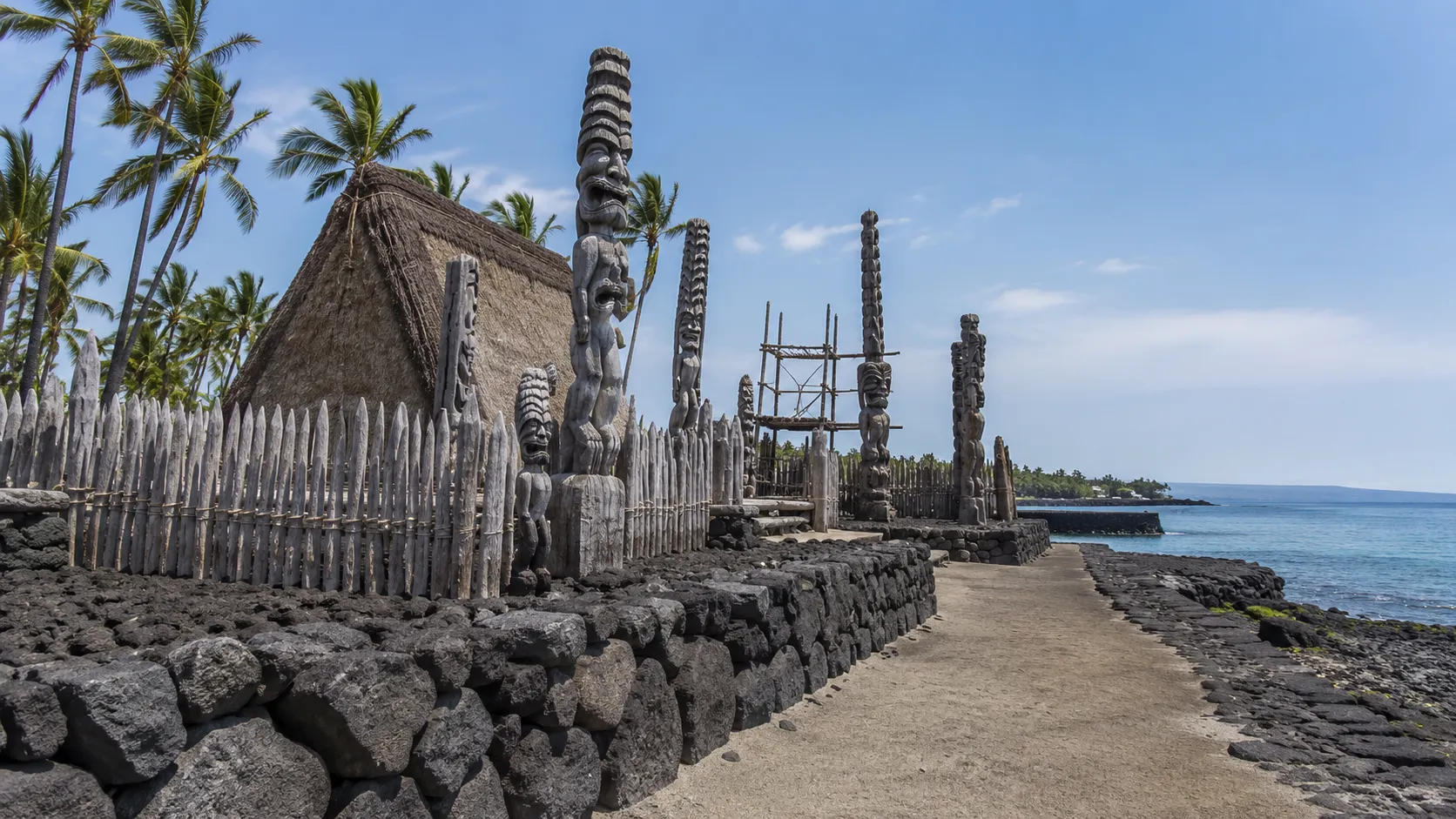
Puʻuhonua o Hōnaunau National Historical Park
Puʻuhonua o Hōnaunau National Historical Park, also known as the Place of Refuge, is one of the most important cultural sites on Hawaii Island. In ancient Hawaii, people who broke kapu, or sacred laws, could seek safety and forgiveness at a puʻuhonua. The site also protected defeated warriors and civilians during times of battle.
The park includes royal grounds, temple structures, fishponds, stone walls, and carved wooden kiʻi. Walking through the area gives visitors a clearer understanding of how spirituality, law, leadership, and land were connected in ancient Hawaiian society.
Puʻukoholā Heiau National Historic Site
Puʻukoholā Heiau National Historic Site is located along the Kohala Coast. The large stone temple was built under Kamehameha I in the late 1700s and is closely connected to the events that led to the unification of the Hawaiian Islands.
The site has a visitor center, walking paths, and interpretive information that explains the importance of the heiau. Visitors can learn about Kamehameha I, Hawaiian leadership, sacred architecture, and the role of prophecy in Hawaiian history.
Kaloko-Honokōhau National Historical Park
Kaloko-Honokōhau National Historical Park near Kailua-Kona preserves ancient Hawaiian settlement areas, fishponds, petroglyphs, house sites, and coastal trails. The park shows how Native Hawaiians lived in close relationship with the ocean and used advanced aquaculture systems to manage food resources.
The fishponds are especially important because they show the skill and environmental knowledge of early Hawaiian communities. Instead of seeing the coastline only as scenery, visitors can understand it as a place of food, family, work, and spiritual connection.
🌿 Food, Farming, and Hands-On Cultural Activities
Taro, Poi, and Traditional Hawaiian Food
Food is one of the most personal ways to understand Hawaiian culture. Taro, or kalo, holds deep cultural importance in Hawaiian tradition. It is used to make poi, a staple food that has nourished generations.
Some cultural farms and local experiences allow visitors to learn about taro patches, traditional crops, and Hawaiian food preparation. These activities may include pounding poi, learning about native plants, or understanding how farming connects to family, land, and community.
Kona Coffee and Local Food Culture
Hawaii Island is also known for Kona coffee, farmers' markets, fruit stands, and local food traditions shaped by many communities. While coffee farming is not an ancient Hawaiian culture, it is part of the island's modern agricultural story.
A coffee farm visit can show how land, climate, family businesses, and local farming shape life on the island today. Local food tours and market visits can also introduce travelers to flavors influenced by Native Hawaiian, Japanese, Filipino, Portuguese, Chinese, and other communities.

Farm Tour + DIY BBQ package
Offered by Big Island Abalone — A top-rated farm experience in Kailua-Kona. Free cancellation available. Book your spot today.
Book Farm Experience🌋 Hawaiian Language, Legends, and Volcano Stories
ʻŌlelo Hawaiʻi
The Hawaiian language, or ʻŌlelo Hawaiʻi, is an important part of cultural identity. Visitors will see Hawaiian words in place names, signs, songs, greetings, and local phrases across the island.
Learning basic words such as aloha, mahalo, mauka, makai, keiki, and ʻohana is a small but meaningful step. It is also helpful to learn how to pronounce place names with care. Many Hawaiian place names describe landscapes, winds, rains, stories, or historic events.
Pele and Hawaii Volcanoes National Park
No visit to Hawaii Island feels complete without learning about Pele, the Hawaiian volcano deity. According to Hawaiian tradition, Pele is closely associated with Kīlauea and Halemaʻumaʻu crater. She is connected to lava, volcanic activity, destruction, renewal, and the creation of new land.
Hawaii Volcanoes National Park gives visitors the chance to learn about both geology and Hawaiian cultural perspectives. Ranger programs, cultural demonstrations, and interpretive signs can help explain why the volcanic landscape is more than a natural attraction.
🌺 Cultural Respect
Many visitors feel moved to leave offerings at volcanic sites. However, taking lava rocks is considered disrespectful and brings bad luck according to local beliefs. Leave everything as you found it.
🙏 How to Enjoy Cultural Experiences Respectfully
Travel with awareness of cultural differences. Hawaiʻi's sacred sites, historical locations, and contemporary customs are linked to actual families, communities, ancestors, and spiritual beliefs.
❌ Please Don't
- • Touch cultural features or artifacts
- • Remove rocks, sand, or plants
- • Enter restricted areas
- • Take photos of ceremonies without permission
- • Climb on sacred structures
✅ Please Do
- • Stay on marked trails
- • Support Hawaiian-owned businesses
- • Listen more than you talk
- • Ask permission before taking photos
- • Respect "kapu" (forbidden) signs
Respect is also knowing that some places are not open to visitors. If a site is off-limits or locals have requested that visitors stay away, then it is respectful to do so.
Find the Right Experience
Compare Big Island Cultural Tours
| Experience Type | Best For | Duration | Price From | Includes | |
|---|---|---|---|---|---|
| 🏆 Top Pick Traditional Luau | Families, first-timers | 3–4 hrs | $95 | Dinner, show, cultural stories | Book → |
| 🏛️ Most Educational Historic Sites Tour | History buffs | 5–6 hrs | $120 | Expert guide, park access | Book → |
| 🌋 Unique Volcano Cultural Tour | Nature + culture | 6–8 hrs | $150 | Pele legends, park tour | Book → |
| 🌿 Hands-On Farm & Food Experience | Foodies, kids | 2–3 hrs | $75 | Taro, poi, traditional cooking | Book → |
✅ All tours include free cancellation up to 24 hours before · Prices vary by season
Experience Big Island Culture the Right Way
Join a guided cultural tour led by local Hawaiian experts. Learn the stories, traditions, and values that make Hawaii Island special. Support local communities while creating meaningful memories.
Instant confirmation · Secure booking · Best price guarantee
Common Questions
Frequently Asked Questions
What are the best cultural experiences on Big Island for first-time visitors?
First-time visitors often enjoy a mix of historic sites, live performances, and guided cultural activities. Puʻuhonua o Hōnaunau, Puʻukoholā Heiau, a traditional luau, Hawaii Volcanoes National Park, and a Hilo museum visit are all strong starting points.
These experiences provide a well-rounded introduction to Hawaiian history, spirituality, and modern cultural practices without overwhelming new visitors.
Are Big Island cultural experiences good for families?
Yes, many Big Island cultural experiences are suitable for families with children. Luaus, museum visits, ranger-led programs, cultural demonstrations, food activities, and short historic walks can be engaging for different ages.
Hands-on activities like poi pounding or lei making are especially popular with children because they make culture easy to understand through direct participation.
Perfect for families
Book a Family-Friendly Cultural Tour
Kid-friendly activities · Educational · Fun for all ages
Can visitors attend a traditional luau on Big Island?
Yes, visitors can attend traditional luau experiences on Hawaii Island, especially around the Kona and Kohala resort areas. Most luaus include Hawaiian food, hula, music, storytelling, and Polynesian performance elements. Reservations are recommended, especially during peak travel seasons.
What should visitors wear to cultural sites?
Comfortable and respectful clothing is best. Light clothing, walking shoes, and sun protection are helpful for outdoor sites. At sacred places, avoid clothing that feels too revealing, stay quiet when appropriate, and follow posted signs or local guidance. When in doubt, dress modestly.